October Health Access Meeting Focuses on Health Advocacy in the 24:1
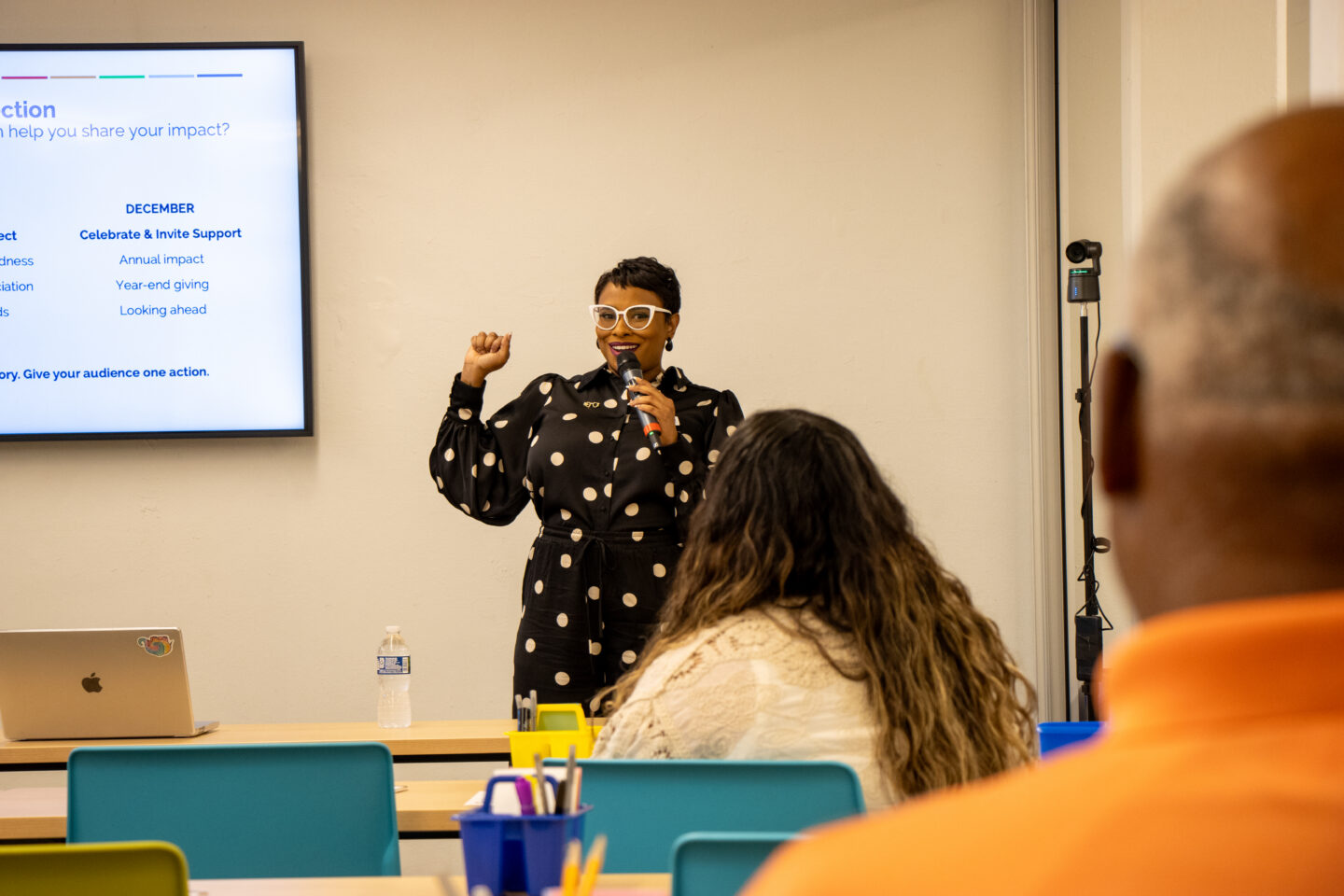
On Thursday, October 30, the Network hosted its monthly network meeting, which focused on health access and advocacy for the 24:1 community.
Guest speakers Christin Simpson of Simpson Consulting and Dr. Chantelle Jones of the Pink Angels Foundation addressed network members about the health resources they can offer to their clients, including trauma-informed care and access to mental health services, as well as vital information on health and social services.
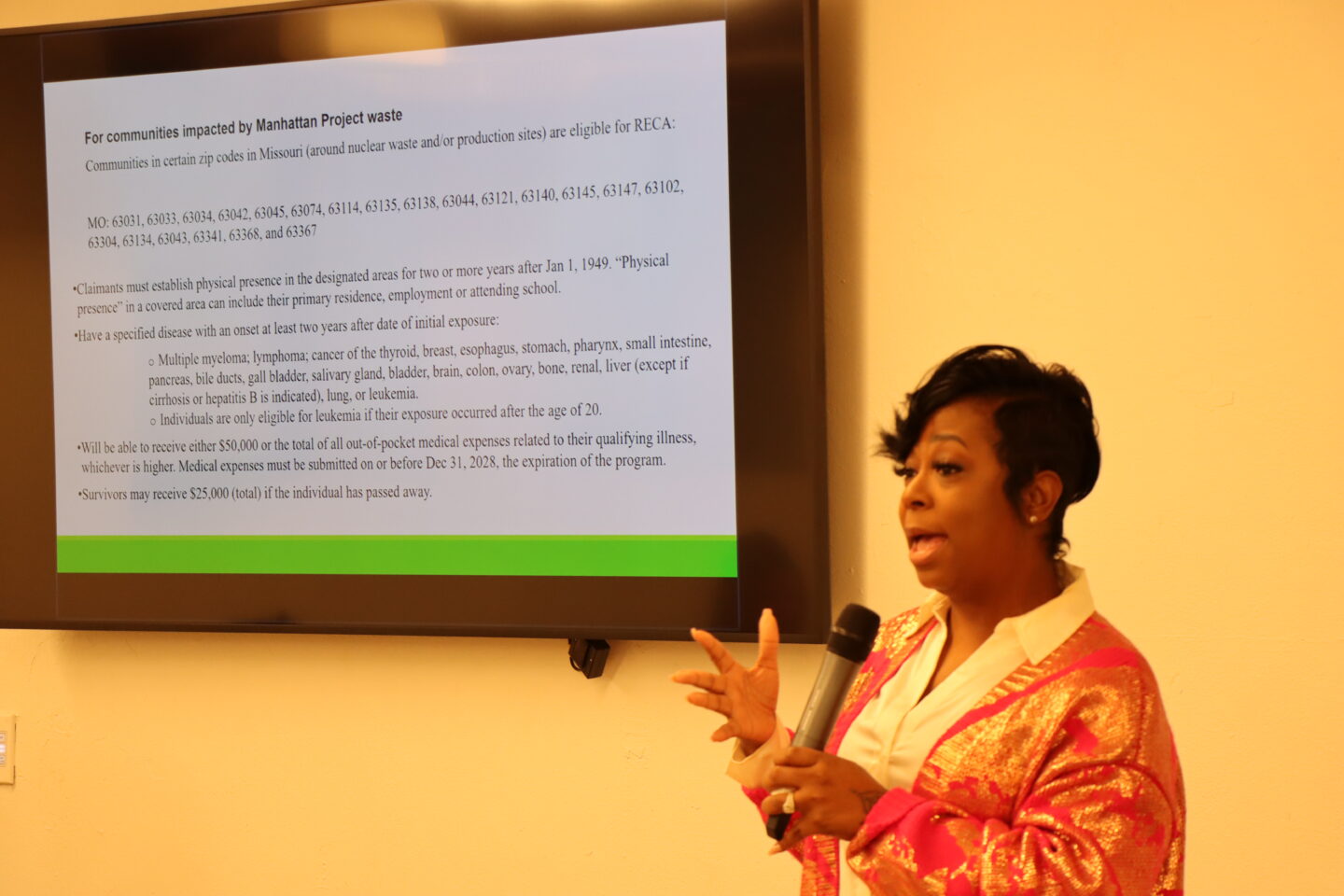
Dr. Jones, founder of the Pink Angels Foundation, an organization dedicated to promoting breast cancer education and awareness, who is also a breast cancer survivor herself, provided information about the Radiation Exposure Compensation Act (RECA), which served as a focal point for the meeting. The act, which was signed into law in 1990, is a federal law that provides compensation to individuals who developed serious illnesses due to radiation exposure from atmospheric nuclear weapons testing during the 1940s but has only recently begun to have traction in the state of Missouri within the last year.
There are multiple locations in St. Louis where nuclear weapons testing was conducted, and several municipalities within the 24:1 area are unfortunately affected due to runoff from Coldwater Creek, a water tributary that flows 14 miles through North St. Louis County. Coldwater Creek is known to be contaminated with radioactive waste, and individuals who live near the creek are more likely to develop certain cancers and illnesses, such as breast and prostate cancer.
Simpson, who has been a practicing Family Nurse Practitioner for 17 years, said that the history of the nuclear waste sites and Coldwater Creek contributes to the generational health trauma that many individuals and families face, particularly African Americans.
“Since the 1940s, there has been toxic waste in areas where people live, and when you drive a certain demographic of people to live in those areas, you know who it is going to affect the most,” Simpson said.
Simpson continued by saying that specific illnesses that affect African Americans and the traumas that co-exist include living at or below the poverty line, not having access to quality education and job security all play a role in why the health of African Americans declines more quickly than other ethnicities.
Dr. Jones implored members to share their stories with the government in an effort to advocate for better health outcomes. “We need you to get the word out for people to show up to town halls and tell their stories. Until they hear those stories, they will not be held accountable,” Dr. Jones said.
The October 2025 Network Health Access Meeting was held for informational purposes only. For more information and resources about the RECA Act, please visit the Pink Angels Foundation website link above.
For more information about the RECA act, please click on the links below:
Radiation Exposure Compensation Act-U.S. Department of Justice
To view the October 2025 Health Access II Meeting in its entirety, please click on the video below.